







Top 7 Aquant Alternatives for Asset-Centric Field Service in 2026

Aquant helps technicians diagnose complex equipment at the point of repair. Running the service workflow around that repair takes a different kind of system.
A dispatcher has to assign the right technician. Before an invoice goes out, the back office needs complete labor and parts data. Controllers want a current view of service profitability.
This comparison covers Service Pro by MSI Data, PTC ServiceMax, IFS Cloud, Salesforce Field Service, Microsoft Dynamics 365 Field Service, ServiceNow, and SightCall, and the operational problems each one addresses.
Why do service teams look for Aquant alternatives?
Aquant doesn't publish pricing. A service leader running 50 to 500 technicians gets a number only after a sales process scopes the implementation. The product is built around diagnosis. Technicians get answers from manuals and repair history while standing at the equipment. Integrations connect it to CRM, FSM, and ERP systems. Its workflow agents support scheduling and billing. Whether a job is covered and when the invoice goes out still depend on the systems Aquant connects to.
Start with the workflow you need to fix
Before comparing tools, name the underlying operational problem. Two scenarios cover most of the teams searching for Aquant alternatives. The dispatcher playing Tetris with technician schedules every morning needs the operational stack digitized. The controller doing work-in-progress tracking in a manual Excel function needs the same foundation before an intelligence layer can do anything useful.
Scenario A: You already have scheduling, dispatch, and work order management. You want AI to help technicians troubleshoot faster and capture tribal knowledge before senior techs retire. Aquant-category tools may be worth evaluating.
Scenario B: You’re still running paper work orders, re-keying data between a spreadsheet and your ERP, and invoicing two weeks after the job closes. An AI intelligence layer won't fix that. You need an FSM platform first, and some of the best ones now include AI natively.
When another point solution won't help
Adding an AI diagnostics tool on top of a broken operational stack doesn't fix the stack. If work orders are incomplete and service history is fragmented, the AI has nothing reliable to reason from. The intelligence layer is only as good as the data underneath it.
What should asset-centric teams look for in an Aquant alternative?
Two categories of alternatives exist: AI-only tools that, like Aquant, layer intelligence on top of existing systems, and FSM platforms that include AI natively. Asset-centric teams with 50-plus technicians managing large equipment almost always need the second category.
Before evaluating individual tools, these are the criteria that separate field-ready platforms from point solutions.
Full FSM vs. AI-only: An FSM platform handles scheduling and dispatch, work order management, preventive maintenance, contract and warranty coverage, mobile technician access, and ERP integration. The AI built into that platform has access to real asset records, service history, and work order data, which makes the guidance useful in the field.
Offline mobile access: Technicians working on power generation equipment or industrial machinery are often in basements, crawlspaces, equipment rooms, or remote sites without reliable connectivity. The mobile app must work offline and sync when connection is restored.
AI grounded in your own service data: Generic AI answers pulled from the open web are not useful to a technician diagnosing a specific crane model with a known fault history. The platform needs to ground AI responses in the customer's own asset records, service history, manuals, and work orders.
ERP integration without replacement: The platform must connect to Sage 100, NetSuite, Epicor Kinetic, Epicor Prophet 21, and Microsoft Dynamics Business Central natively or through a documented API. Teams won't replace their back-office system to use a field service tool.
Contract and warranty coverage enforcement: Warranty claims need labor and parts data captured on site. When that capture breaks down, eligible reimbursement gets written off. Waukesha-Pearce Industries (WPI), a heavy-equipment dealer, recovered seven figures in warranty reimbursements in under a year after moving to Service Pro. Its back office now gets labor and parts data from the field the same day.
Top Aquant alternatives for asset-centric field service teams
Each profile below shows who the tool is built for, what it adds beyond Aquant, and where it falls short. The right pick depends on the workflow you need to fix.
Service Pro by MSI Data
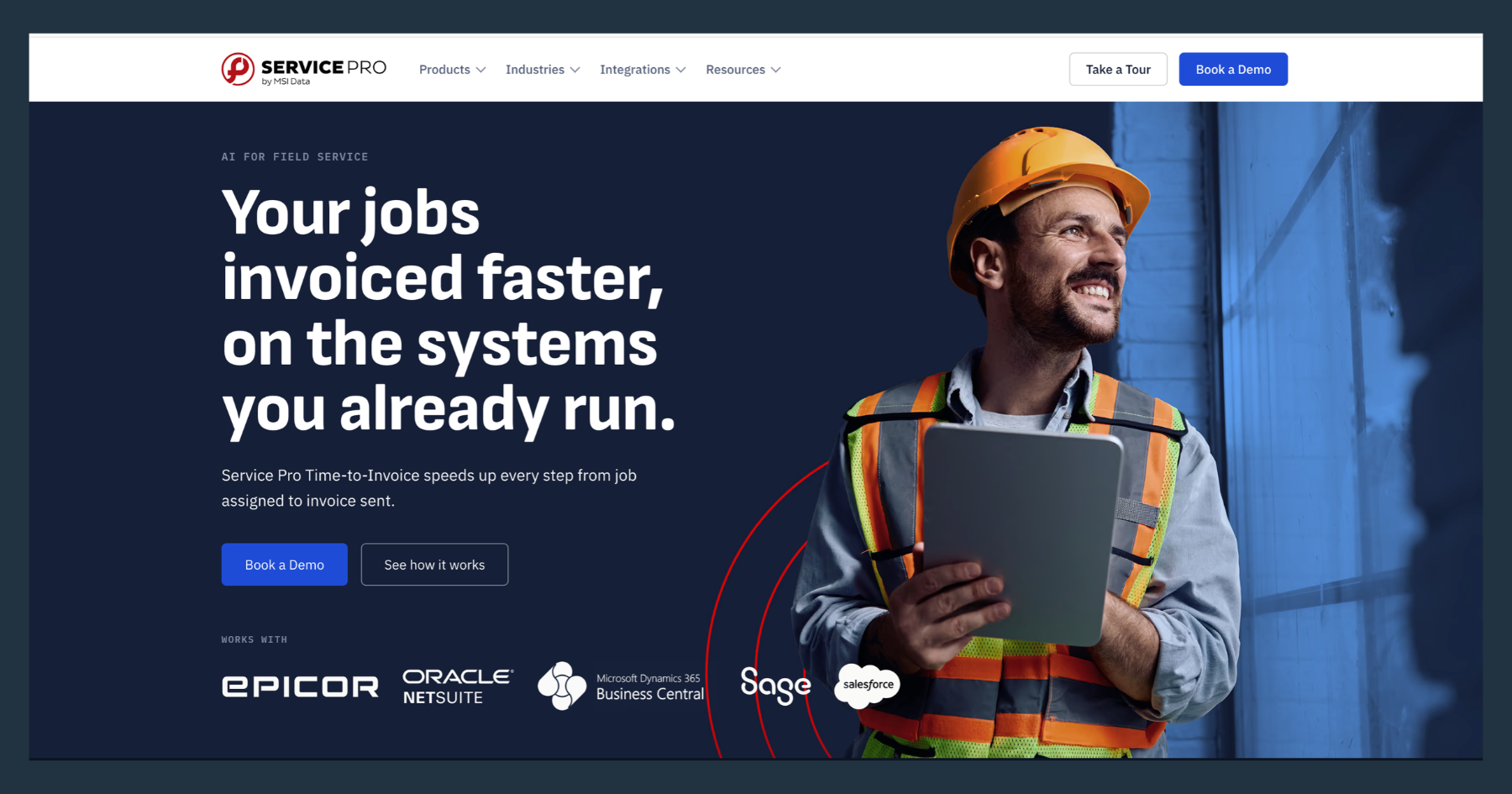
Service Pro FSM is an asset-centric field service management platform built for equipment-heavy service organizations in power and energy, industrial equipment and manufacturing, commercial HVAC and refrigeration, and related asset-intensive industries.
It covers the full operational layer, including scheduling and dispatch, work order management, preventive maintenance, contract and warranty coverage enforcement, offline-capable mobile access, and ERP integration with Sage 100, NetSuite, Epicor P21, and Microsoft Dynamics Business Central. It includes purpose-built agents across field execution, revenue recovery, operations intelligence, and technician guidance, grounded in the customer's own asset records, service history, manuals, and work orders. Every trial includes a Forward Deployed Engineer embedded with the customer's team.
- Best for: Asset-centric service organizations with 50-plus technicians in power generation, industrial equipment, or related equipment-heavy verticals
- Covers that Aquant doesn't: Full FSM platform, contract and warranty enforcement at work-order intake, same-day invoice sync to ERP, offline mobile access
- Limits: Purpose-built for the named verticals; organizations outside those industries should evaluate fit carefully
PTC ServiceMax
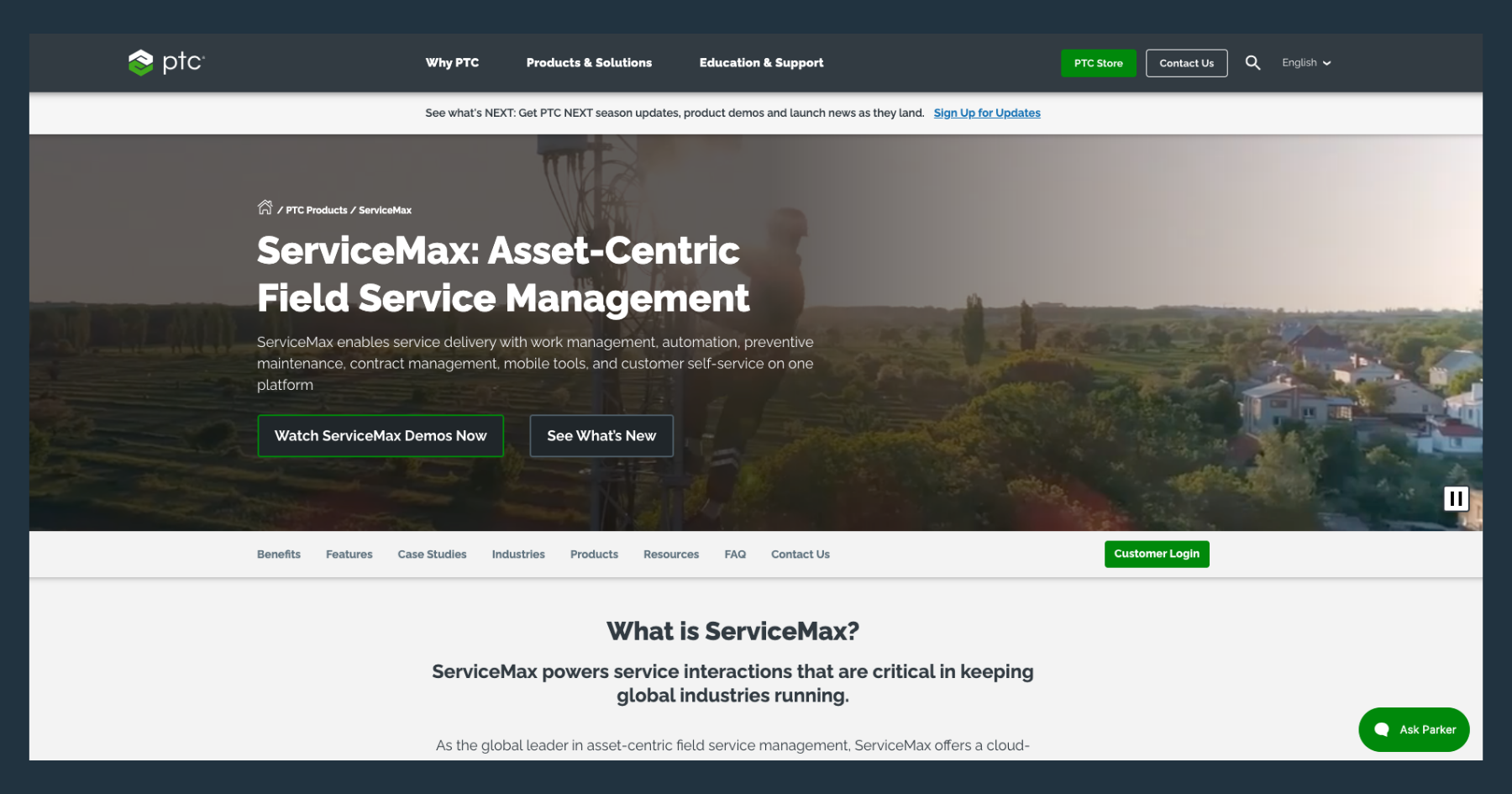
PTC ServiceMax is an enterprise field service platform for organizations that manage complex equipment over long asset lifecycles. Its scope runs from work orders and dispatch to installed-base management and warranty entitlements. ServiceMax sits within PTC's broader service-lifecycle portfolio. Teams already running Windchill or ThingWorx can connect product-lifecycle data to IoT-driven predictive maintenance.
- Best for: Large enterprises with complex asset service needs already invested in the PTC ecosystem
- Covers that Aquant doesn't: Full FSM platform, asset lifecycle management, service contract management
- Considerations: Enterprise pricing, implementation scope, Salesforce-platform requirements, integration needs, and administrator capacity.
IFS Cloud Field Service Management
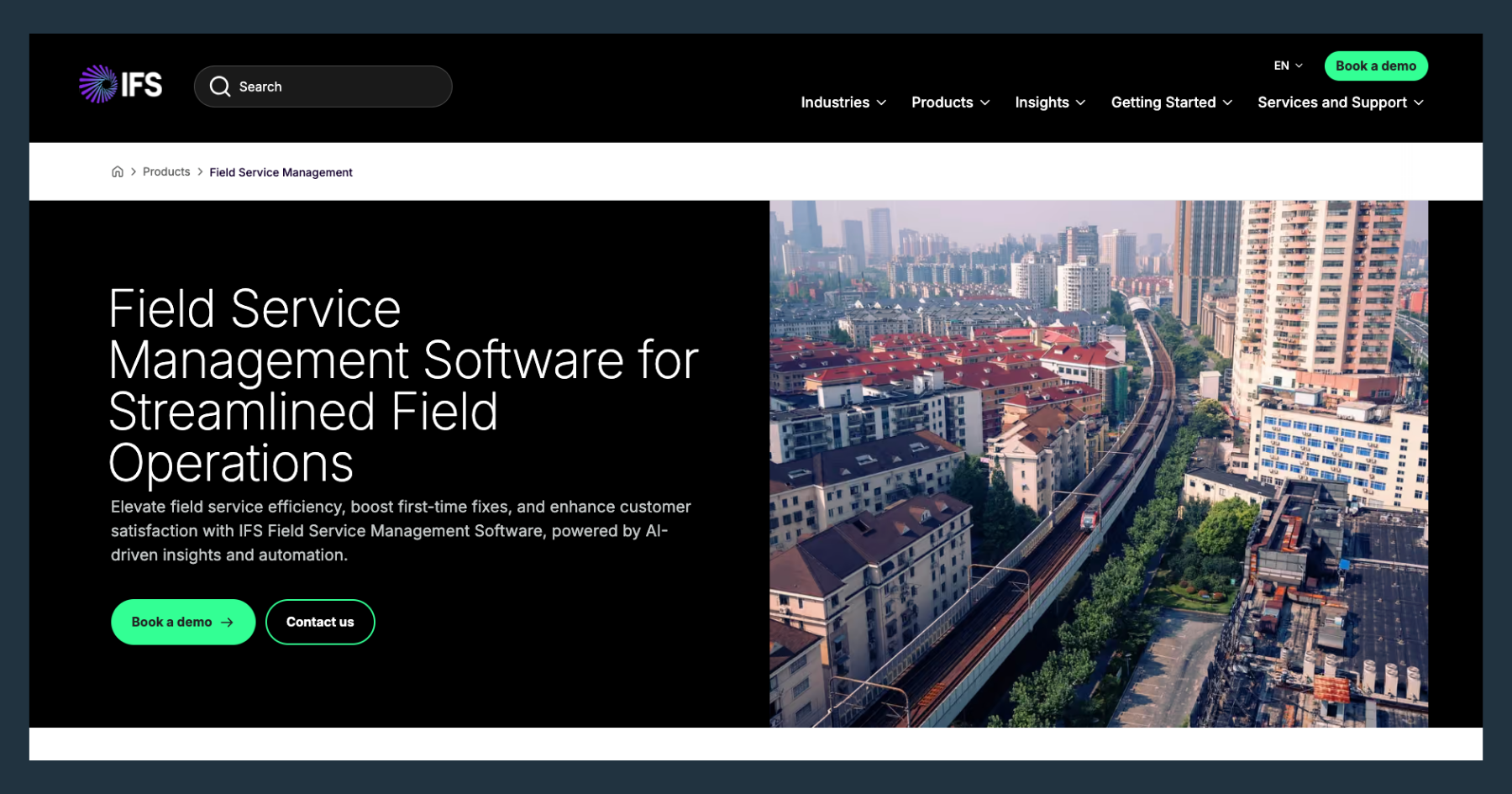
IFS Cloud runs ERP, enterprise asset management, and field service management on one platform and data model. Finance and field service work from the same records, with no separate ERP-to-FSM integration layer. IFS is built for global operations that need advanced scheduling and complex operational planning. Its customers include energy and utilities companies and manufacturers.
- Best for: Global enterprises in asset-intensive industries that need ERP and FSM unified
- Covers that Aquant doesn't: An operational backbone for ERP, enterprise asset management, field service, workforce planning and scheduling, mobile execution, inventory, contracts, and financial workflows.
- Considerations: IFS Cloud is a broad enterprise platform. Assess implementation scope, migration requirements, governance, process-design needs, licensing, training, integration needs, and internal capacity before treating it as a replacement for an existing ERP or FSM system.
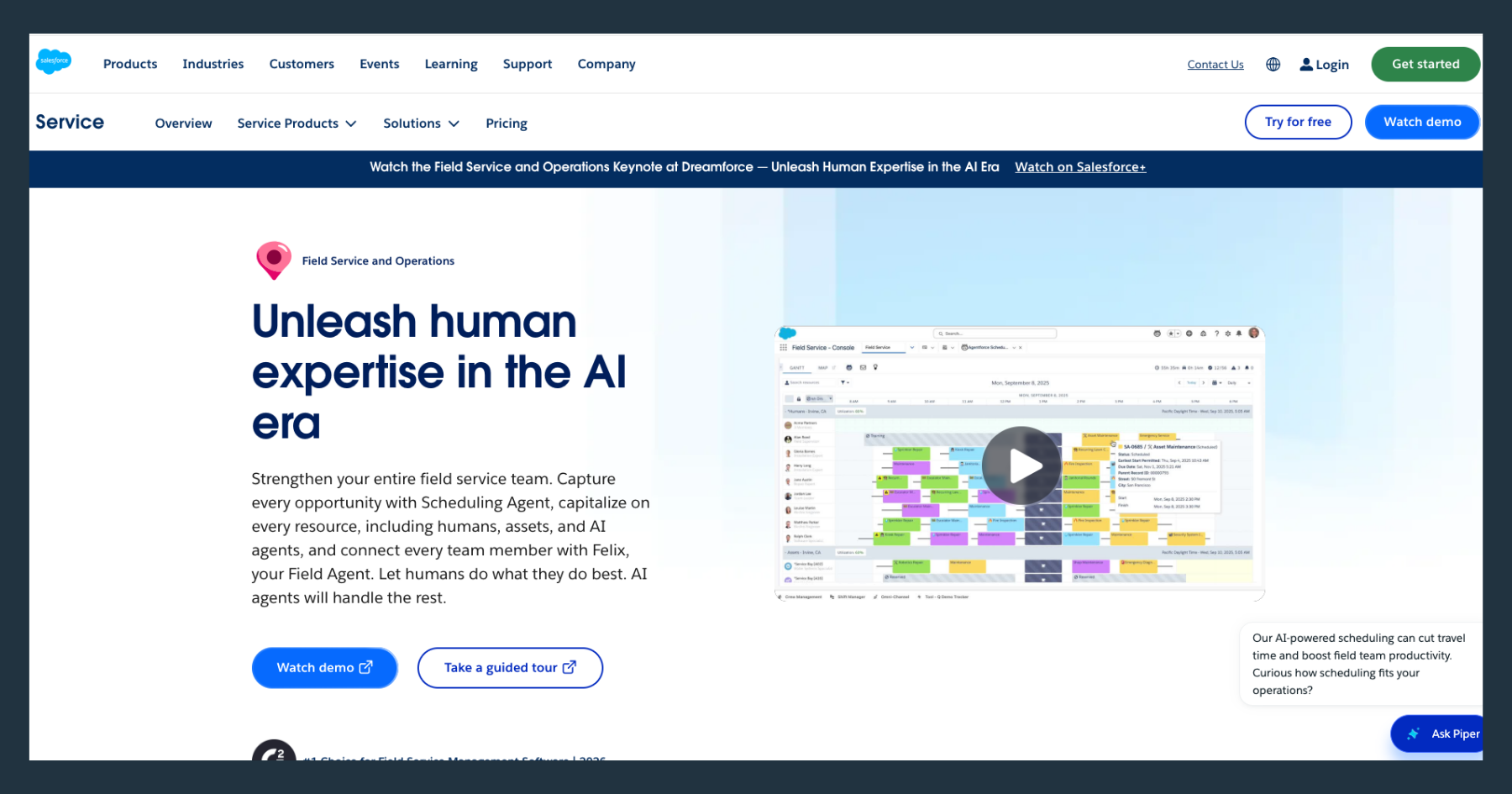
Salesforce Field Service
Salesforce Field Service is built on Salesforce and covers scheduling and work orders, with AI through Einstein and Agentforce. For organizations already on Salesforce CRM, customer and asset data live on the same platform.
Asset records support hierarchies and link to work orders and warranty terms. Salesforce documents limits of 50 hierarchy levels, 2,000 child assets per asset, and 10,000 assets in a hierarchy. The tree-grid view displays up to 500. For a large, deeply nested installed base, test those limits against your real asset structure.
- Best for: Service organizations already running Salesforce CRM that want scheduling, dispatch, work orders, and mobile service operations connected to customer and case records.
- Covers that Aquant doesn't: Scheduling, dispatch, work-order management, mobile access, mobile execution, asset records, maintenance workflows, and Salesforce-native AI features.
- Considerations: Implementation often requires Salesforce administration, data-model design, configuration, and potentially integration work.
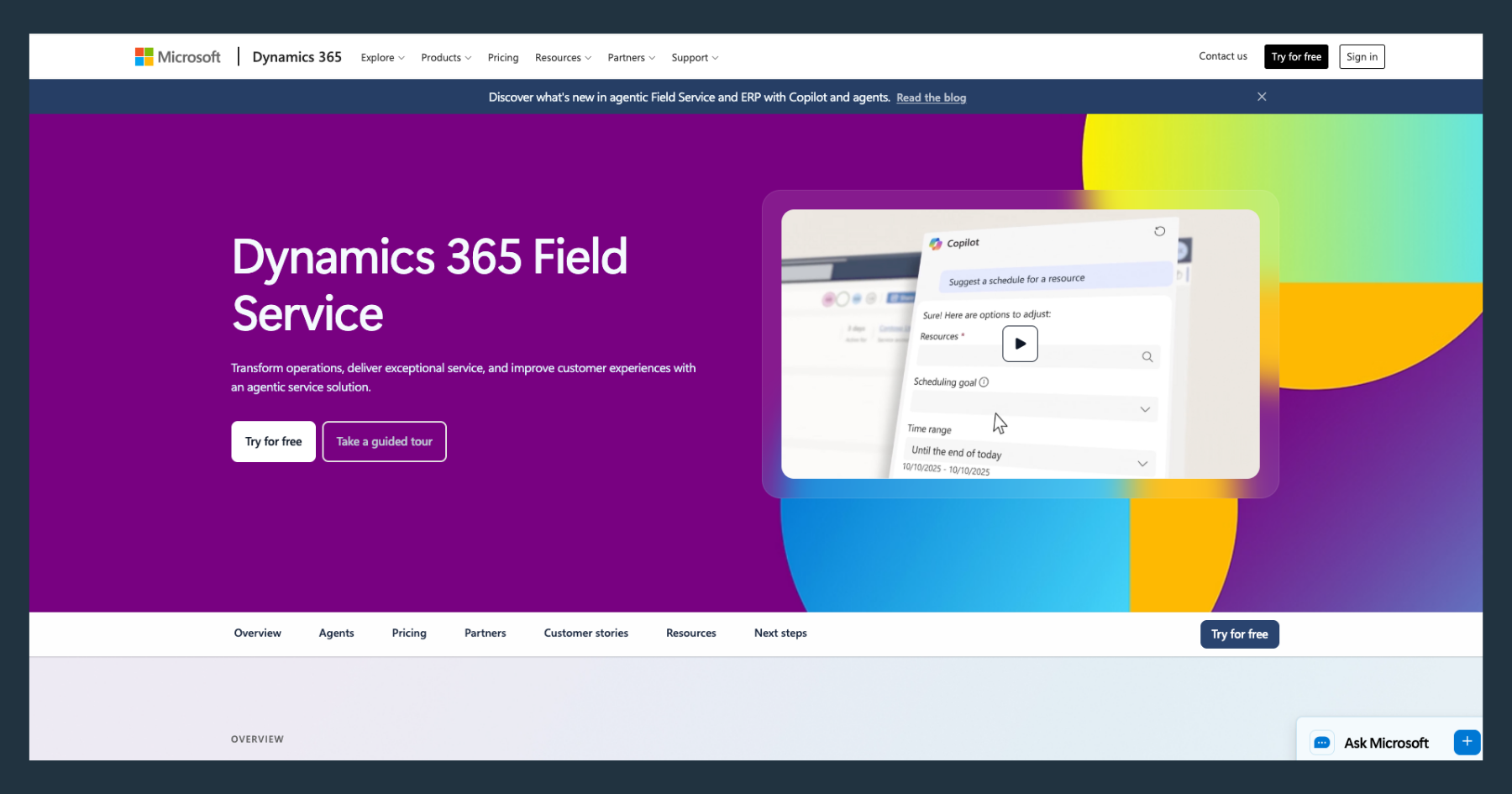
Microsoft Dynamics 365 Field Service
Microsoft Dynamics 365 Field Service covers scheduling and service agreements for organizations on Dynamics 365 and the Power Platform. Copilot adds work-order summaries and natural-language search.
Business Central customers can connect financial and inventory data through Microsoft's supported Field Service integration. It runs on Dataverse and needs the Field Service Integration and Business Central Virtual Table apps, configured through assisted setup.
- Best for: Organizations already invested in Dynamics 365, Business Central, Microsoft 365, Azure, and the Power Platform that want field service connected to their existing Microsoft data and workflows.
- Covers that Aquant doesn't: Scheduling, dispatch, work orders, mobile execution, service agreements, asset records, and ERP-connected service workflows.
- Considerations: Full value requires existing Microsoft ecosystem investment; standalone adoption adds complexity.
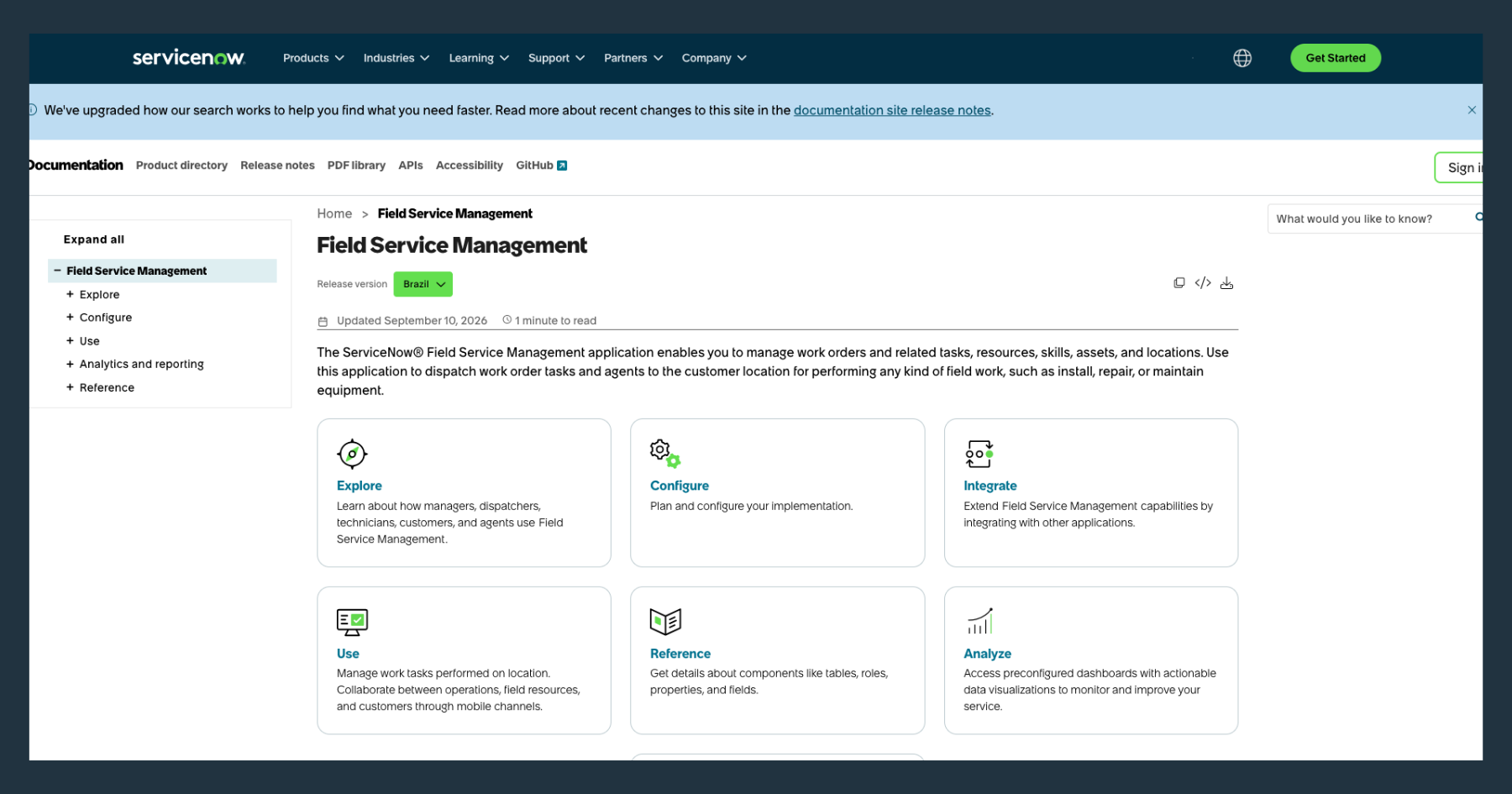
ServiceNow Field Service Management
ServiceNow Field Service Management covers work orders and skills-based dispatch, with offline task completion on mobile. It's built for organizations that run field work inside a broader ServiceNow workflow.
For existing customers, field work connects to IT Service Management and the CMDB on the Now Platform. The same governance model then extends from the service desk into field execution.
- Best for: Large enterprises already on ServiceNow that need field service connected to IT service management, customer service, enterprise workflows, and platform governance.
- Covers that Aquant doesn't: Work-order management, scheduling, dispatch, mobile execution, task workflows, parts, asset usage, and ServiceNow workflow automation.
- Considerations: Generally requires platform configuration, data-model design, integration work, and administrators with ServiceNow expertise.
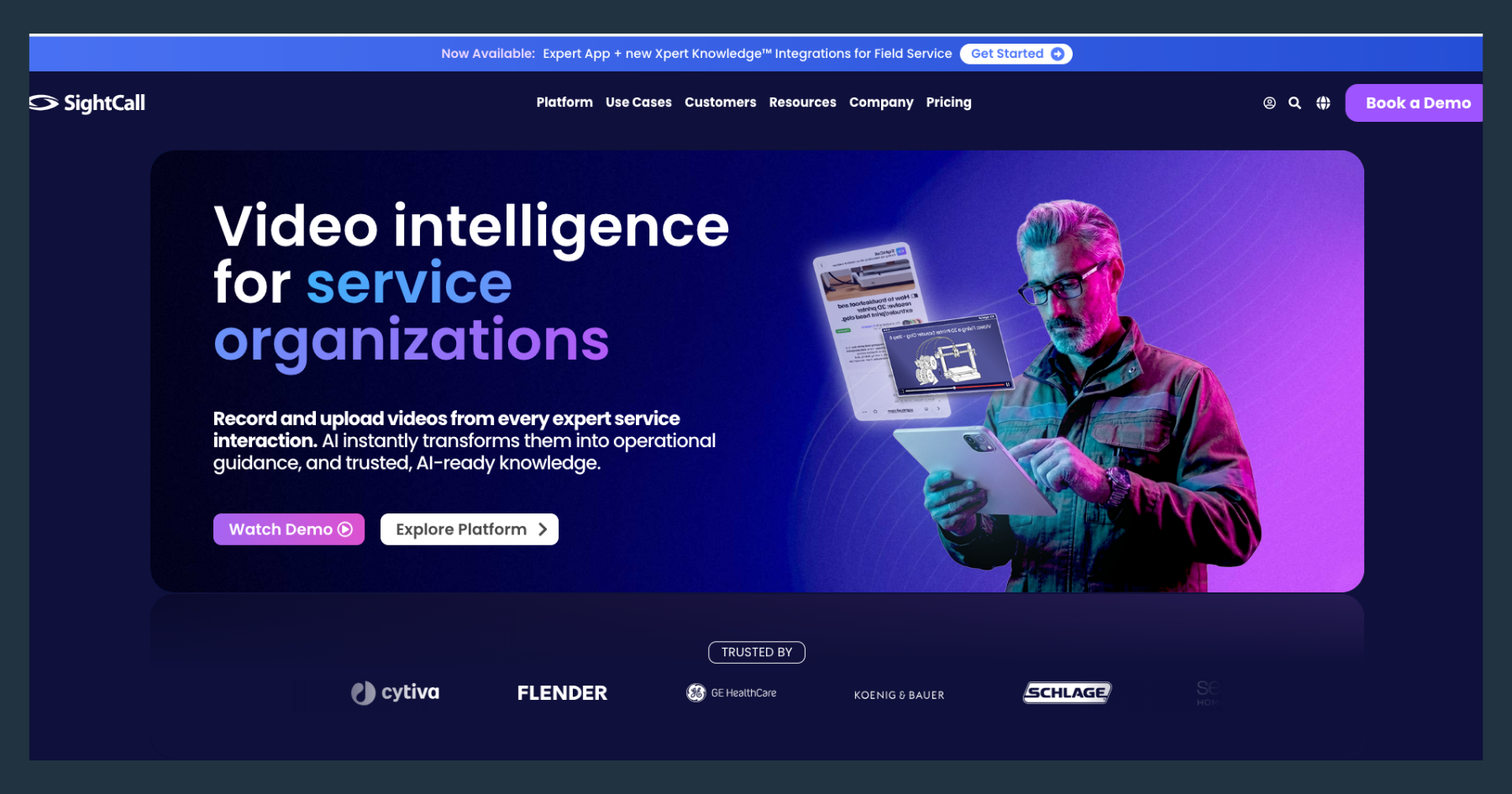
SightCall
SightCall is a visual-intelligence platform for remote expert support and service-knowledge capture. Technicians and remote experts use live video and AR annotations to diagnose issues together. It integrates with ServiceNow, Salesforce, Microsoft Dynamics 365, and SAP Field Service Management. Teams launch visual sessions from an existing case or work order. Xpert Knowledge uses AI to turn recorded service sessions into reviewable, step-by-step multimedia guidance.
SightCall's appointment scheduling covers visual-support sessions and doesn't replace an FSM dispatch board. Technician capacity and invoicing stay with the connected systems.
- Best for: Teams that need remote visual support and want to capture expert knowledge from live service sessions for reuse
- Covers that Aquant doesn't: Live video-based expert support, AR-guided collaboration, visual evidence capture, and structured multimedia knowledge creation from actual service sessions.
- Considerations: Not an FSM platform; doesn't cover scheduling, work orders, asset management, or ERP integration
Aquant alternatives at a glance
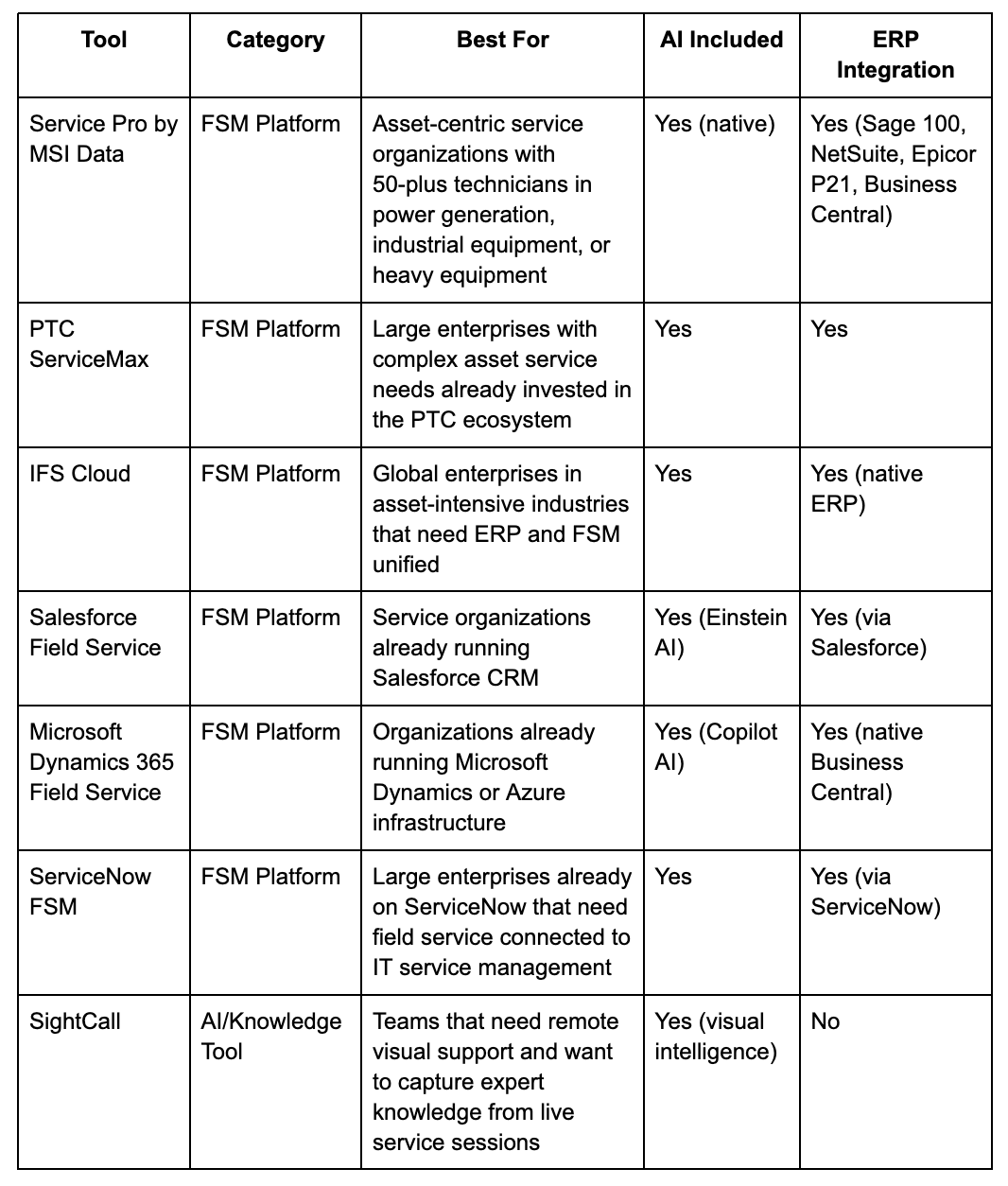
Which Aquant alternative fits your operation?
Each scenario below points to a specific tool and the reason it fits.
Equipment-heavy service operations: Service Pro by MSI Data is built for asset-centric operations in power generation, industrial equipment and manufacturing, and heavy equipment. It covers the job from dispatch to contract and warranty coverage enforcement, with ERP-agnostic integration to Sage 100, NetSuite, Epicor P21, and Business Central.
Global enterprise asset service: Choose IFS Cloud if you run a large, multi-site asset service operation and want ERP and field service on one platform. Plan for a major program, with phased implementation and data migration.
Salesforce-centered teams: Choose Salesforce Field Service if Salesforce already holds your customer and service data. You'll need in-house admin capacity to configure the data model and mobile experience around how your teams work.
Microsoft-centered teams: Choose Microsoft Dynamics 365 Field Service if you already run Business Central and the Power Platform. Microsoft supports the Business Central integration. Setup still takes configuration and data mapping. Without an existing Microsoft foundation, it's a harder case to make as a standalone FSM purchase.
Visual remote support and knowledge capture: Choose SightCall if your core problem is that a remote expert can't see what the technician sees. It adds live video and AR guidance to an existing service stack. Scheduling and billing stay with the system that runs your work orders.
What to check before you switch
Before switching platforms, audit the operational foundation that any new system will sit on.
Asset, work order, and ERP data: Asset records, service history, work orders, and ERP data are the foundation that any AI layer will reason. If that data is fragmented across spreadsheets and a legacy system, migrating to a new platform is also an opportunity to consolidate it.
Rollout timing and technician adoption: Before an evaluation gets far, someone asks how long rollout takes and what retraining will cost. One buyer said outright that they wouldn't implement anything new midyear. Rollout complexity depends on ERP integration scope and the workflows that must be live on day one. Ask each vendor for a timeline built on your operation's current state.
First-time fix rate, time-to-invoice, and warranty recovery: Quantify first-time fix rate, time-to-invoice, and warranty revenue recovery. Reference customers saw more than 16 days between job close and invoice before changing their workflow. The target is same-day invoice sync. Warranty recovery shows how much eligible labor and parts reimbursement gets captured. A service leader can bring these numbers to a controller or PE-backed executive to show where margin is leaking. The same numbers make the case for whether a change is worth the investment.
Frequently Asked Questions
Is Aquant a field service management platform?
Aquant is a service intelligence platform. Field service management platforms handle different functions. It analyzes historical service data to surface diagnostics and technician guidance, but it doesn't manage scheduling, dispatch, work orders, asset records, or ERP billing.
Can an Aquant alternative connect to Sage, NetSuite, or Epicor without replacing them?
Yes. Service Pro FSMis an ERP-agnostic platform with native connectors to Sage 100, NetSuite,, Epicor Prophet 21, and Microsoft Dynamics Business Central.
What data does a field service AI need to give technicians useful guidance?
Field service AI needs access to the customer's own asset records, equipment manuals, service history, and open work orders. Generic AI tools trained on public data cannot answer questions about a specific piece of equipment with a known fault history at a specific customer site.
How do asset-centric service organizations measure ROI from a new FSM platform?
Four metrics move when an FSM platform is working: first-time fix rate, time-to-invoice, warranty revenue recovery, and technician utilization. These are the numbers that show up in profitability reporting and justify the investment to finance and leadership.
Can an FSM platform automate warranty and contract coverage at the work order level?
Yes. Service Pro FSM checks whether the asset is under an active warranty or maintenance contract when a work order is created and flags it before the technician is dispatched, which prevents billable work from being written off as warranty.
Should teams replace Aquant or add an FSM platform alongside it?
The answer depends on what Aquant is sitting on top of. If the operation already has a mature FSM platform handling scheduling, work orders, and ERP integration, an AI intelligence layer like Aquant may complement it. If the operational foundation is fragmented, a purpose-built FSM platform with native AI is a more direct path to fixing the underlying problem.
See what the wait between a finished job and a sent invoice is costing you.
Run the numbers