
Transition the manual methods you’re using to collect data today by automating the process and making your data work for you.
As the head of a service organization you are like a coach. When your team has a game it’s crucial that you have done the proper scouting (a.k.a data collecting) on your opponent so you know where you can take an advantage. In this same way, your service organization must conduct scouting in the field by collecting pertinent data that highlights where improvements can be made.
Just as bad scouting ends up in losses, bad data collection causes lost opportunities. Instead of relying on outdated manual collection methods, a move to automated processes gives you the edge you need. By restructuring your field service organizations data collection and analysis methods, you can begin to extract the kind of insights that reap huge benefits and ensure your place as a leader in the field.
Make the Transition Easy for your Team with a Modeled Out Planning Phase
While a transition from manual to automated can seem like a tough hurdle, the switch is as simple as knowing what you collect now, how you collect it, and what you want to know in the future. Once you understand the manual processes you’re using now and why you do things a certain way, you can start to reevaluate how to do those processes in an automated system, with fewer touch points and more immediate responses.
You can think of this transition as the ultimate planning phase, or getting your field service playbook ready for game time. You can continue to use whatever data points work for you, but add automated tools for each step that create an easy to follow model for how you want the data to flow. Recording data on paper and waiting for the back office to combine and interpret it just isn’t fast enough for companies to be proactive. Having a mobile device to record detailed data not only makes the data collection process faster; it also makes it more accurate and thorough.
Following the diagram below, you can find examples of how you can automate your current, manual processes with a service management app:
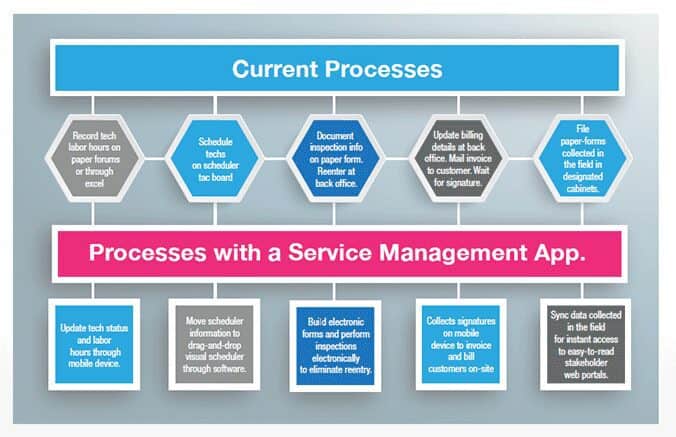
By employing the power of the field workforce for data collection, field service companies can get real-time feedback concerning projects and equipment they are currently working on. There’s no reason to pass the paper and wait on someone else to do it. The best time to get the right information is the first time, which is what automating service helps you do.
With Great Data Comes Great Responsibility
Once you’ve made the transition to automation, you’ll have access to information you never had the resources to see before. Data is the starting point in terms of determining how you stack up against your peers, or opponents, in the field. It gives you the tools you need to optimize operations and make your company more efficient, which is, after all, the number one reason you’re collecting data in the first place.
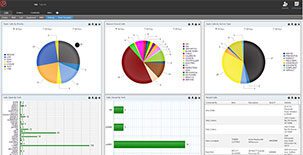
After your current data and means of collecting it are set up in the new system, you can determine what sort of information you always wished you had access to, but couldn’t collect manually. For example, when a technician closes a work order in the field, the service manager is able to see that data in real time and make adjustments to optimize operations ASAP. And with out-of-the-box portals and reports, data is displayed in easy to interpret charts and graphs, which visually lay out how companies can use the information for maximum optimization.
The following three steps outline how you can begin to use data to improve efficiency and, ultimately, increase profitability:
1. Plan—make a plan for what you wish you knew about your organization and map steps that would make that knowledge visible.
2. Measure—use your field service software to measure the data you set out in your plan.
3. Analyze—once you’ve collected the data, analyze it. Figure out what you could be doing better to improve the results of the data.
After going through the steps above service executives can then point to specific business outcomes that could be improved based on the results of the data. This data provides actionable information which allows businesses to identify trends, opportunities, and threats that force them to reexamine their assumptions and start collecting wins on the field.
Increased Data from the Playing Field Means Opportunity for the Entire Team
By using data to drive business decisions, your operational efficiency will begin to rise in relation to your peers. Once you’ve established what sort of performance you expect, you can use data to determine whether you’re meeting those expectations; and, if you’re not, prescribe remedies that will enable you to meet them in the future. By using data to benchmark yourself in the field, you can translate findings into action for all the players in the service cycle:
- Service managers—Service managers and executives use data results to improve decision making and increase efficiency in all areas of the company.
- Service technicians—Findings from data often lead to techs spending more time on billable resources and less time entering data, traveling, and returning to the office for parts or training materials.
- Schedulers/Dispatchers—Time and inspection data give dispatchers more insight into how long jobs will take, making them better able to schedule the most jobs per technician per day.
- Stake holders— Corporate offices, equipment manufacturers, and retail distributors can use findings from data to find out what companies and customers want, adjusting their sales and/or production strategies accordingly.
- Customers— With increased access to data, you can set up customer widgets for customers to view their equipment performance or other service insights. With an automated system, customers can also receive alerts and technician ETAs electronically without human intervention.
Conclusion: A Transition from Manual to Automated Data Collection Leads to a Winning Service Season
It’s more important than ever for field service organizations to have strategies in place to measure their efficiency and identify areas to improve. Transitioning to automated data collection is the best way to make those measurements clear and actionable. Once your data stream flows flawlessly into your business decisions, you’ll want even more of it. You’ll see that the information gained through a quick and accurate data process will make your company more efficient all around.
Roadmap to Becoming a More Efficient Service Organization

Use this guide as a blueprint for a successful transition from manual to automated service processes with all-in-one mobile and back office service automation software.