
Every missed first-time fix carries a hidden cost. A second truck roll, rescheduled labor, an irritated customer, a technician who has to start over, and up to $1,000 wasted. For field service organizations, repeat visits aren’t just an inconvenience; they’re one of the most expensive and preventable drains on profitability.
That’s where first-time fix rate (FTFR) comes in. It’s one of the most telling metrics in field service management, bringing together technician performance, dispatch quality, inventory readiness, and customer experience into a single number you can use to drive change.
In this blog, we’ll cover everything you need to know, including how to define, calculate, and improve first-time fix rate for your field service organization.
What Is the First Time Fix Rate?
First-time fix rate (FTFR) is a metric that measures the percentage of jobs that are completed successfully on the first visit e, without additional return visits or truck rolls. The higher the percentage, the better.
It’s a simple ratio, but it reflects the health of your entire operation. A technician can only fix something on the first visit if they’ve been dispatched to the right job, arrive with the right parts and tools, and have the skills and documentation to complete the work. FTFR captures technician preparedness, dispatch accuracy, and parts availability into a single number.
You may also see it called “first-visit resolution” or “first call fix rate”, but the core idea is the same.
One important distinction: first-time fix rate is not the same as first contact resolution (FCR), which measures whether a customer’s issue is resolved in a phone or chat interaction. FTFR is specific to what happens in the field after a technician is dispatched.
Why First Time Fix Rate Matters for Field Service
First-time fix rate has a direct, measurable impact on revenue, costs, and customer satisfaction. The effects compound across every job your team completes.
Increased Customer Satisfaction
Resolving an issue on the first visit ends the customer’s disruption immediately. No second appointment, no more time off work. According to Aberdeen Group’s report “First-Time Fix: A Metric That Drives Success,” organizations with a first-time fix rate above 70% achieve an 85% customer satisfaction rate, compared to 66% for those below that threshold.
Satisfied customers renew contracts, refer others, and require far less effort to retain.
Lower Operational Costs
Every repeat visit doubles the cost: truck roll, labor hours, and scheduling overhead, paid twice. Trucks rolls alone can cost anywhetre from $50 to $1,000. If a part needs expediting, you’re paying a premium on top of that. A team running at 70% FTFR is essentially re-doing a third of its work. Pushing that number to 85% or higher frees up capacity, reduces overtime, and eliminates the administrative drag of rescheduling jobs that should have closed the first time.
Higher Technician Productivity and Morale
Callbacks demoralize technicians. Constantly returning to incomplete jobs reduces billable hours and contributes to burnout and turnover. Techs who consistently close jobs on the first visit are more productive and more likely to stay. Higher first-time fix rate means more of each technician’s day goes toward billable work, which pays dividends in utilization and retention, two of the largest cost levers in field service.
How to Calculate First Time Fix Rate
The formula is straightforward:
(Total jobs completed without return trip ÷ Total jobs completed) × 100 = First-time Fix Rate %
For example: if your team handled 200 service calls last quarter and resolved 160 of them on the first visit, your FTFR is 80%.
(160 ÷ 200) × 100 = 80%
In practice, the calculation gets tricky. You need a clear definition of what counts as a completed first visit versus a follow-up. Teams that track this manually often end up with inconsistent data. The cleanest approach is to define the rules in your field service management software and let the system classify jobs automatically, keeping the metric consistent over time.
What Is a Good First Time Fix Rate?
Industry data puts the average first-time fix rate across field service at roughly 75–80%. Best-in-class operations consistently hit 85–90% or higher. If you’re below 70%, repeat visits are likely a significant drag on your margins and customer experience.
Benchmarks need context. HVAC and appliance repair tend to score higher because jobs are predictable and parts are manageable. Telecom and heavy industrial equipment often run lower due to job variability and expensive parts. The most useful benchmark is your own historical data: set a baseline, identify job types and technicians with the lowest First-time fix rate, and focus improvement there.
What Causes a Low First Time Fix Rate?
Before you can improve first-time fix rate, you need to know what’s dragging it down. These are the most common root causes:
Insufficient Parts and Inventory. The technician arrives on-site, diagnoses the issue, and doesn’t have the part. It’s the single most common reason for a repeat visit, and one of the most preventable. Poor truck-stock management, inaccurate inventory records, and no visibility into what’s actually on a van before dispatch all contribute.
Skill Gaps and Mismatched Dispatch. Sending a general technician to a job that requires a specialist, or a junior tech to a complex piece of equipment they haven’t been trained on, guarantees a callback. Dispatch decisions made without visibility into technician certifications and job requirements are a structural FTFR killer.
Poor Communication Between Office and Field. When techs don’t have accurate job details before arrival (incomplete site notes, wrong equipment model, missing access codes) they lose time on-site and sometimes can’t complete the work at all. The information exists somewhere; it just isn’t reaching the field.
Inadequate Job Planning and Scheduling. Rushed scheduling, back-to-back appointments with no buffer for complex jobs, and no pre-dispatch checklist all increase the odds of an incomplete visit. First-time fixes require preparation, not just showing up.
Incomplete or Outdated Documentation. If the service manual the tech references on-site is three revisions out of date, or the asset history doesn’t reflect the last three service visits, they’re diagnosing in the dark. Stale documentation leads to wrong diagnoses and wrong parts, which means return trips.
Improper Diagnosis/Preparation: Inaccurate or insufficient information about the asset, or missing documentation regarding its service history, prevents technicians from arriving prepared.
How to Improve First Time Fix Rate: 8 Proven Strategies
There’s no single lever that moves first-time fix rate, but these eight strategies, applied together, are how field service leaders build operations where first-time fixes are the norm.
1. Skills-Based Dispatch and Dynamic Scheduling
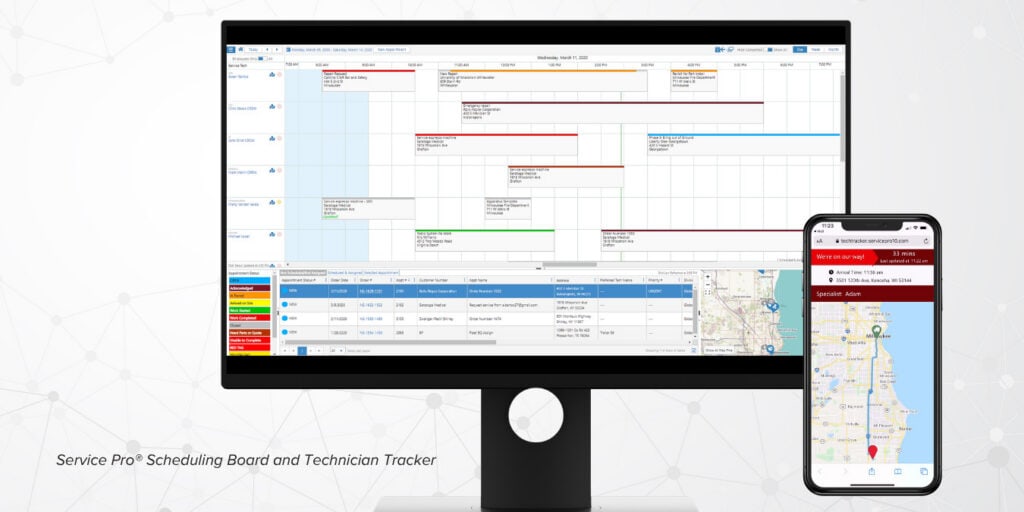
Getting the right technician to the right job is the highest-leverage FTFR fix for most organizations. Skills-based dispatch means matching assignments by verified certifications and equipment experience, not just availability. When a cancellation opens a slot, dynamic re-assignment logic re-optimizes the dispatch board in real time so high-priority jobs stay staffed with qualified technicians.
2. Improve Inventory Visibility and Truck-Stock Management
You can’t fix what you don’t have on the truck. Real-time visibility across warehouse and van inventory lets dispatchers confirm parts are loaded before a technician leaves, not after a 45-minute drive. Min/max thresholds handle automated replenishment, and parts reservations tied to work orders prevent the same component from being pulled for another job before the scheduled appointment.
3. Build Pre-Job Kitting and Readiness Checklists
First-time fixes are often won or lost before anyone leaves the warehouse. Pre-dispatch kitting means confirming the technician has the right parts, tools, access codes, site notes, and asset history before departure. A structured checklist eliminates the most common cause of repeat visits: arriving on-site missing something that was entirely knowable beforehand.
4. Upgrade to Paperless Workflows and Mobile Access
Paper-based workflows introduce delay and errors that directly hurt FTFR. Paperless workflows, digital work orders, embedded manuals, and mobile checklists eliminate guesswork in the field. Techs can log parts, capture photos, and collect e-signatures in real time. Offline capability is essential: connectivity is unpredictable in industrial facilities and rural areas, and a workflow that breaks without signal isn’t a reliable workflow.
5. Centralize Data with Field Service Management Software
Toggling between disconnected systems for customer records, inventory, asset history, and pricing quietly kills FTFR. A centralized FSM platform creates one source of truth that updates in real time. Integrations with ERP, CRM, and accounting extend that synchronization so everyone from dispatch to invoicing is always working from the same data.
6. Use Remote Diagnostics and Guided Troubleshooting
The best first-time fix is sometimes one that avoids a truck roll entirely. Video triage, annotated photo sharing, and remote monitoring let specialists confirm a diagnosis and verify parts before anyone leaves. For on-site visits, guided troubleshooting trees help techs work through complex problems systematically, and let senior technicians mentor junior ones remotely instead of generating a callback.
7. Implement Preventive and Predictive Maintenance
Reactive calls are harder to fix on the first visit because the failure mode is unknown until arrival. PM schedules create predictable, plannable work where technicians know exactly what they’re walking into. Condition-based monitoring goes further, catching degradation early so you can schedule service proactively with full context, resulting in fewer emergencies and better conditions for first-time resolution.
8. Close the Loop with Continuous Improvement and Feedback
Improving FTFR is an ongoing discipline, not a one-time project. Every callback is a data point: Was it a parts issue? A dispatch mismatch? Outdated documentation? Over time, patterns point to systemic fixes. BI dashboards that surface FTFR by technician, job type, and region make those patterns visible. Technician feedback and customer survey scores add context, turning FTFR into a continuous improvement engine rather than just a lagging indicator.
Improve Your First Time Fix Rate with Service Pro
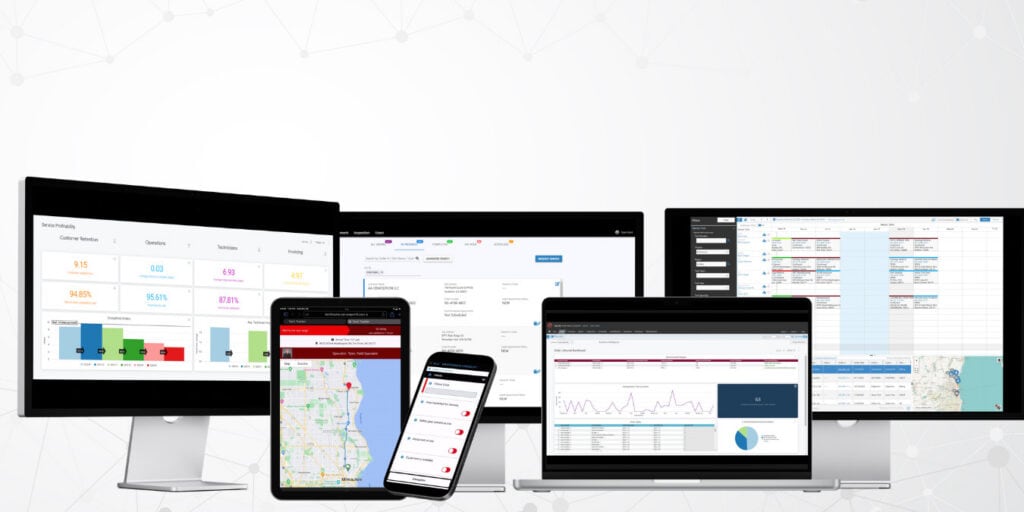
Service Pro, MSI Data’s purpose-built field service management platform, brings together the strategies covered above into a single solution built specifically to move first time fix rate.
Service Pro brings together the tools that directly move first-time fix rate:
- Smart Scheduling and Skills-Based Dispatch: Automatically match technicians to jobs based on certifications, equipment experience, and proximity. Dynamic re-optimization keeps your dispatch board efficient as the day changes.
- Real-Time Truck-Stock Management: Track parts inventory across every van and warehouse location. Set automated reorder thresholds and reserve parts against specific work orders so techs always leave with what they need.
- Digital Work Orders and Mobile Access: Give technicians everything they need on a single mobile device (work orders, checklists, service manuals, asset history, parts usage logging, photo capture, and e-signatures) with full offline capability for jobs in low-connectivity environments.
- Integrated Asset and Service History: Every customer asset, warranty record, and service history is synchronized in a single platform, with integrations to your ERP, CRM, and accounting systems. No more swivel-chair searching before dispatch.
- Preventive Maintenance Scheduling: Automate recurring PM schedules, inspection workflows, and condition-based service triggers to reduce emergency calls and give your team more plannable, predictable work.
- BI Dashboards and Performance Reporting: Track FTFR by technician, job type, region, and time period. Identify patterns, measure improvement, and make data-driven decisions about training, stocking, and dispatch rules.
Teams that move from reactive operations to data-driven service delivery don’t just improve their first-time fix rate; they improve the revenue of their entire business.
Ready to see what the Service Pro platform and Service Pro’s AI field service management software can do for your first time fix rate? Schedule a free demo today.