
Your rooftop units are running on an A2L refrigerant timeline your last equipment order didn’t account for. Your dispatchers can’t tell you whether a low-GWP unit is even in a given building without pulling the nameplate on-site. And when a facilities director asks if you can tie into their building automation platform to catch a compressor fault before it becomes a service call, you don’t have a clean way to say yes.
Commercial HVAC in 2026 isn’t the trade it was three years ago. Electrification, the refrigerant transition, AI-driven building automation, and indoor air quality mandates are converging at the same time, and each one is quietly exposing gaps in how contractors dispatch, track compliance, manage contracts, and execute in the field. Contractors who treat these shifts as one-off compliance headaches will keep falling behind the ones who build systems that can absorb the next change and the one after that.
In this brief guide, we’ll break down the trends reshaping commercial HVAC in 2026, the operational gaps each one exposes, and what your field service software needs to do about it.
What’s Driving Commercial HVAC Trends in 2026?
The commercial HVAC trends defining 2026 are electrification and heat pump adoption, the shift to low-GWP A2L refrigerants, AI-powered building automation, rising energy-efficiency standards, and indoor air quality mandates, all driven by regulatory change, decarbonization goals, and shifting building-owner expectations.
2026 marks a tipping point for the industry. The EPA’s Technology Transition rule and the AIM Act’s HFC phase-down are reshaping which refrigerants contractors can legally install, at the same time AI, IoT, and low-GWP equipment are reaching mainstream adoption. Add growing decarbonization mandates, a data center construction boom, and rising IAQ expectations from building occupants, and commercial HVAC contractors are facing more simultaneous change than at any point in recent memory.
The Top Commercial HVAC Trends Reshaping the Industry in 2026
These eight shifts are reshaping how commercial HVAC contractors operate, and each one touches dispatch, compliance, or contract management in a real way.
1. Electrification and Heat Pump Adoption
Electrification is one of the most significant structural shifts underway in commercial HVAC, driven by decarbonization mandates, state-level incentives, and corporate net-zero commitments. All-electric heat pumps have become the default replacement choice for offices, schools, healthcare facilities, and multi-family commercial buildings, and VRF (Variable Refrigerant Flow) systems are now the fastest-growing segment of the commercial HVAC industry, according to ACHR News and Mitsubishi Electric Trane HVAC US (METUS).
The federal incentive picture has shifted, too. The One Big Beautiful Bill Act eliminated the 25C, 25D, and 45L tax credits that had supported energy-efficient HVAC upgrades under the Inflation Reduction Act. State-level rebates remain in place in many regions and continue to drive commercial retrofit activity even as the federal landscape narrows.
For contractors, this means more all-electric and VRF installs, more complex commissioning, and a growing need to track which buildings in a service territory have already made the switch.
2. The Shift to Low-GWP Refrigerants and A2L Compliance
The AIM Act set an 85% phase-down trajectory for HFC refrigerants, and the EPA’s Technology Transition rule capped new residential and light commercial AC/HP equipment at 700 GWP starting January 1, 2025. In practice, that’s pushed the industry toward A2L refrigerants like R-32 and R-454B. As of mid-2025, nearly 90% of new residential and light commercial AC/HP systems already used substitute refrigerants, according to ACHR News.
Operationally, this transition touches almost everything. Technicians need new certifications and A2L-specific handling and leak-detection training, equipment costs have risen 10-30%, and refrigerant purchases, usage, and recovery now need to be tracked at the job and technician level for EPA 608 compliance. The EPA has since finalized revisions extending installation timelines for pre-2025 R-410A inventory, giving contractors some breathing room, though the long-term direction hasn’t changed.
Service Pro’s EPA refrigerant compliance tracking captures refrigerant purchases, usage by job and technician, and recovery amounts, giving commercial HVAC contractors audit-ready EPA 608 documentation without spreadsheet sprawl.
Curious how EPA 608 tracking looks in practice? Schedule a free Service Pro demo.
3. AI-Powered Building Automation Systems and Smart HVAC
AI and IoT have moved from future technology to operational norm in commercial HVAC. Building automation systems now adjust dynamically to occupancy, weather, and real-time electricity prices, and predictive algorithms can flag potential compressor failures weeks in advance, helping cut unplanned downtime. Controls and sensors are the fastest-growing equipment category in the commercial HVAC market, projected at an 8.89% CAGR through 2031, according to Mordor Intelligence.
For contractors, this shift is changing what building owners expect from a service relationship. Owners increasingly want their HVAC provider to integrate with their building automation systems, monitor connected equipment remotely, and act on alerts before a failure happens rather than after.
Service Pro’s IoT-connected field service capability lets commercial HVAC contractors ingest sensor data from connected equipment, automatically generate work orders from alerts, and shift from reactive break-fix service to predictive maintenance, without anyone having to sit and watch a dashboard.
4. Rising Demand for Energy-Efficient HVAC Systems
Demand for energy-efficient HVAC systems is being pushed from two directions at once: regulation and real estate economics. ASHRAE 90.1-2022 raised chiller efficiency minimums, the EU’s EPBD is tightening standards abroad, and the SEER2 standard now governs split systems in the U.S. At the same time, LEED Platinum and other high-performance buildings are commanding rent premiums of $3 to $5 per square foot, according to Mordor Intelligence, giving owners a financial reason to chase efficiency on top of the regulatory one.
Integrated platforms coordinating HVAC, lighting, and plug loads are regularly delivering 18-22% in whole-building energy savings. For commercial HVAC contractors, this is both a market opportunity and an operational requirement: owners increasingly expect contractors to deliver measurable energy outcomes as part of the job.
5. Indoor Air Quality (IAQ) Becomes the Standard, Not a Premium
Post-pandemic IAQ expectations have hardened into permanent requirements for commercial buildings. ASHRAE 62.1-2022 raised minimum ventilation requirements, and MERV-rated filtration, UV irradiation, and real-time air-quality sensors are now baseline scope for healthcare facilities, schools, and Class A commercial offices. The U.S. IAQ market is projected to reach roughly $12 billion in sales between 2026 and 2029.
For contractors, IAQ has become a standard line item in nearly every commercial HVAC bid. Contractors who can install, monitor, and service IAQ infrastructure, alongside cooling and heating equipment, are capturing a larger share of each project and building longer-term relationships with facility owners in the process.
6. Dual-Fuel and Hybrid HVAC Systems
Dual-fuel systems pair a heat pump with a traditional furnace, automatically switching between the two based on real-time utility rates and outdoor temperature. They’ve emerged as a pragmatic bridge between decarbonization goals and operating-cost realities, particularly in commercial settings where full electrification isn’t yet economical due to cold-climate performance limits or local utility rate structures.
For contractors working in regions where electrification alone doesn’t pencil out, dual-fuel systems offer a way to move customers toward lower-carbon operation without asking them to accept a performance or cost tradeoff they’re not ready for. Expect more RFPs and retrofit requests specifying dual-fuel configurations as building owners look for a middle path.
7. The Commercial HVAC Labor Shortage and Workforce Crisis
The labor shortage is now the top operational constraint cited by commercial HVAC business owners. The industry is short roughly 110,000 technicians, according to ACHR News, and that gap is widening as A2L, VRF, and smart-system installations all require specialized training that takes time to build. An aging workforce is compounding the problem, with senior technicians retiring faster than the industry can train up-and-coming technicians.
The consequence is straightforward: contractors who can’t get less-experienced technicians performing at a senior level will lose contract renewals and miss growth opportunities, because building owners aren’t lowering their expectations to match a thinner bench.
Service Pro AI gives less-experienced technicians real-time troubleshooting guidance and access to complete equipment service histories right in the field, closing the skill gap without waiting for a senior tech to be available.
8. HVAC-as-a-Service and Outcome-Based Service Contracts
Commercial HVAC is shifting away from one-time installs and break-fix work toward long-term performance contracts, where contractors guarantee energy savings, uptime, and IAQ thresholds over 10 to 15 year agreements. It’s the fastest-growing service model in the commercial HVAC market, with performance contracting and HVAC-as-a-Service projected at an 8.93% CAGR through 2031, according to Mordor Intelligence. Carrier’s own 2025 results reflect the shift: the company’s aftermarket segment delivered its fifth consecutive year of double-digit growth, and commercial HVAC orders grew roughly 50% year-over-year on the strength of long-cycle, data-center-driven demand.
Winning HVAC-as-a-Service work takes more than a good sales pitch. Contractors need rock-solid service contract management, automated preventive maintenance scheduling, and the analytics to prove they’re hitting the KPIs written into the contract, because a guarantee you can’t measure isn’t much of a guarantee.
Stay Ahead of Commercial HVAC Trends with Service Pro
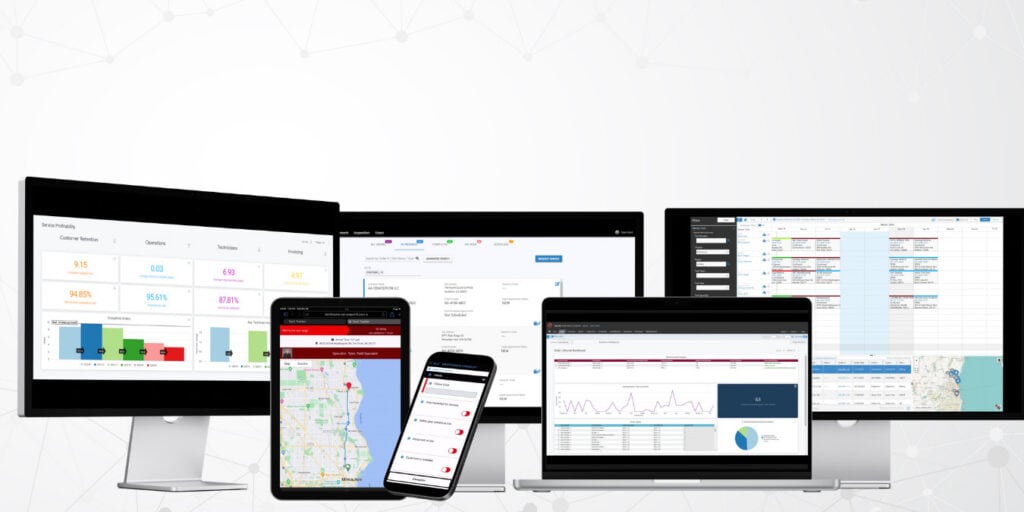
Keeping pace with these trends takes a platform engineered specifically for the operational complexity of commercial HVAC. Service Pro by MSI Data is an asset-centric field service management platform purpose-built for equipment-service businesses, and it maps directly to every trend covered above:
- EPA 608 refrigerant compliance tracking for the A2L transition
- Service contract management and preventive maintenance automation for HVAC-as-a-Service and performance contracting
- IoT-connected field service for smart building and building automation integration
- Service Pro AI for technician enablement, closing the skills gap created by the labor shortage
- Complete equipment service histories, so techs walk into every job already knowing refrigerant type, install date, warranty status, and prior service notes
- ERP integrations with Epicor Prophet 21, NetSuite, Microsoft Dynamics Business Central, and Sage 100, so your operation runs as one connected system
Service Pro has been built exclusively for equipment-centric service businesses for more than 15 years, backed by U.S.-based support and engineered for the operational complexity of commercial HVAC specifically.
BTU Group, a UK-based provider of commercial and residential HVAC and building maintenance services managing more than 20,000 buildings, saw what that specificity can do. Before Service Pro, the company’s engineers were completing the same job differently depending on who showed up, and generating compliance documentation across thousands of buildings was, in Managing Director Andrew McCracken’s words, “a job within itself.” After switching to Service Pro, the BTU Group standardized its inspection checklists, cut the paperwork burden on engineers, and used the time saved to take on new contracts.
“We simply could not function effectively without Service Pro,” McCracken says. “Everything we need to do, it’s able to do.”
The commercial HVAC contractors who win in 2026 won’t be the ones who react fastest to each new regulation or technology shift. They’ll be the ones whose field service software can already keep pace with all of it.
Ready to see how Service Pro is built for commercial HVAC operations? Schedule a free demo or get in touch with our team.