
A technician drives forty minutes to a job site, opens the panel, and finds a problem that could have been caught over the phone. Or worse, they diagnose the issue correctly but the part isn’t on the truck, so the job gets rescheduled and another technician makes the same drive next week. Multiply that pattern across a fleet running dozens of jobs a day, and the cost adds up in ways that rarely show up on a single invoice.
Every unnecessary truck roll pulls a technician away from billable work, adds wear to a vehicle, and asks a customer to wait longer than they should have to. For service organizations trying to grow margins without growing headcount, truck roll reduction is one of the highest-leverage levers available.
This guide breaks down what a truck roll actually costs once every category is accounted for, the most common reasons avoidable dispatches happen, and eight strategies field service leaders are using to make sure every truck that leaves the yard is necessary.
What Is a Truck Roll?
A truck roll is the dispatch of a field service technician and vehicle to a customer site to diagnose, install, repair, or maintain equipment, typically triggered by a service request, a scheduled maintenance visit, or an equipment failure alert.
The True Cost of a Truck Roll
The cost of a truck roll goes well beyond a technician’s hourly wage, extending into vehicle expenses, administrative overhead, and costs that never appear on an invoice at all.
Direct costs are the easiest to see. Labor includes not just wages but overtime and travel time, since a technician sitting in traffic is a technician not generating revenue. Vehicle expenses stack up through fuel, maintenance, insurance, and depreciation on every mile driven. Parts and materials consumed on-site add another layer, particularly when a job requires more than what was quoted. Estimates vary by industry and job complexity, but many organizations see per-visit costs ranging from $175 to over $1,000 once these factors are combined. Aberdeen Group research puts the baseline cost of a single dispatch at $200 to $300 per service call, with specialized equipment and premium parts pushing that figure considerably higher.
Indirect costs are less visible but just as real. Scheduling and dispatch overhead grows every time a job needs to be reassigned or rescheduled. Administrative time spent documenting a visit, following up with a customer, or processing a return trip pulls office staff away from other work. Then there’s opportunity cost: every hour a technician spends on a truck roll that shouldn’t have happened is an hour they aren’t spending on a job that generates new revenue.
Hidden costs are the hardest to quantify but often the most damaging over time. Customers who experience repeated visits or long wait times are more likely to churn, and that risk compounds with every callback. Unnecessary mileage adds up across a fleet’s environmental footprint. And a pattern of poor service experiences, even when each individual incident seems minor, chips away at the brand reputation that drives referrals and contract renewals.
Common Causes of Unnecessary Truck Rolls
Before an organization can meaningfully reduce truck rolls, it needs a clear picture of why avoidable dispatches happen in the first place.
Before an organization can meaningfully reduce truck rolls, it needs a clear picture of why avoidable dispatches happen in the first place.
- No Fault Found Dispatches: A technician arrives on-site only to discover the issue is minor or doesn’t exist at all. These account for a meaningful share of avoidable visits across the industry.
- Low First-Time Fix Rates: Industry averages hover around 75 percent, according to Aberdeen Group, meaning roughly one in four jobs requires a return visit because of missing parts, an incomplete diagnosis, or a technician sent without the right skill set.
- Increasing Product Complexity: IoT-connected equipment introduces a wider range of potential failure modes than a technician might have encountered on older, simpler systems.
- Poor Scheduling and Dispatch Decisions: Assignments made without visibility into technician skills, parts availability, proximity, or SLA urgency routinely set up visits to fail before a technician ever leaves the yard.
Key Strategies for Truck Roll Reduction
Reducing truck rolls isn’t about cutting corners on service. It’s about applying the right mix of technology, process, and data so that every dispatch is necessary and every technician who does go out arrives prepared.
1. Leverage Remote Diagnostics and Virtual Triage
Remote diagnostics and AR-powered visual support let teams assess and often resolve issues before a technician is ever dispatched. When a visit is genuinely needed, that same visibility helps ensure the right technician and the right parts are sent the first time, eliminating a large share of no-fault-found dispatches in the process.
2. Invest in Predictive Maintenance
Predictive maintenance uses IoT sensor data and condition monitoring to catch problems before they become failures. Instead of reacting to emergency calls, service teams can schedule planned, bundled visits around real equipment conditions, which raises operational efficiency and reduces the volume of urgent, unplanned dispatches.
3. Improve First Time Fix Rates with Pre-Job Readiness
Confirming the correct parts, asset history, site notes, and access codes before a technician leaves the shop lifts first-time fix rates and directly cuts down on repeat truck rolls. Pre-job readiness turns preparation into a repeatable process rather than something left to individual technician habit.
4. Use AI-Powered Scheduling and Skills-Based Dispatch
Matching technicians to jobs based on certifications, equipment experience, proximity, parts already loaded on the truck, and SLA urgency dramatically improves the odds of a successful first visit. When plans change mid-day, dynamic re-assignment logic keeps the schedule optimized instead of forcing dispatchers to solve it manually.
5. Optimize Routes and Geo-Cluster Appointments
Grouping nearby jobs and sequencing stops to minimize deadhead miles frees up time in the schedule for more productive calls. Building buffers into the day also reduces the cascading delays that push technicians into rushed, under-prepared visits later in their shift.
6. Empower Customers with Self-Service Tools
Troubleshooting guides, knowledge bases, and customer portal access let customers resolve simple issues on their own, deflecting dispatches that never needed a technician in the first place. These tools also tend to improve customer satisfaction, since resolution happens on the customer’s timeline rather than waiting for the next available appointment.
7. Centralize Data and Integrate Systems (ERP/CRM/IoT)
A single source of truth across ERP, CRM, and IoT platforms closes the information gaps that cause avoidable dispatches and incomplete repairs. When dispatch, inventory, and service history all live in disconnected systems, someone eventually pays for that disconnect in the form of a wasted trip.
8. Track KPIs and Use Data Analytics to Drive Continuous Improvement
First-time fix rate, no-fault-found rate, mean time to repair, callback rate, and parts-not-available rate are the metrics that reveal where truck rolls are being wasted. Data analytics and BI dashboards surface the patterns behind those numbers over time, turning truck roll reduction from a one-time initiative into an ongoing discipline.
The Role of Digital Transformation in Truck Roll Reduction
Reducing truck rolls at scale requires more than isolated process tweaks. It requires digital transformation across the entire service operation, since each piece reinforces the others.
- IoT-connected assets feed the data that predictive maintenance models depend on.
- Mobile-first field apps eliminate paperwork and speed up execution on-site.
- Integrated platforms sync that data in real time so dispatch, inventory, and billing are never working from outdated information.
- Data analytics closes the loop, turning every completed job into a data point that improves the next one.
Together, these pieces represent a shift from reactive, truck-heavy service operations toward proactive, intelligence-driven ones, where every dispatch is deliberate rather than default.
Unlock Truck Roll Reduction with Service Pro
Service Pro by MSI Data is a field service management platform built to support every strategy covered in this guide, from smart scheduling and skills-based dispatch to mobile work order execution, parts management, predictive maintenance workflows, and BI reporting.
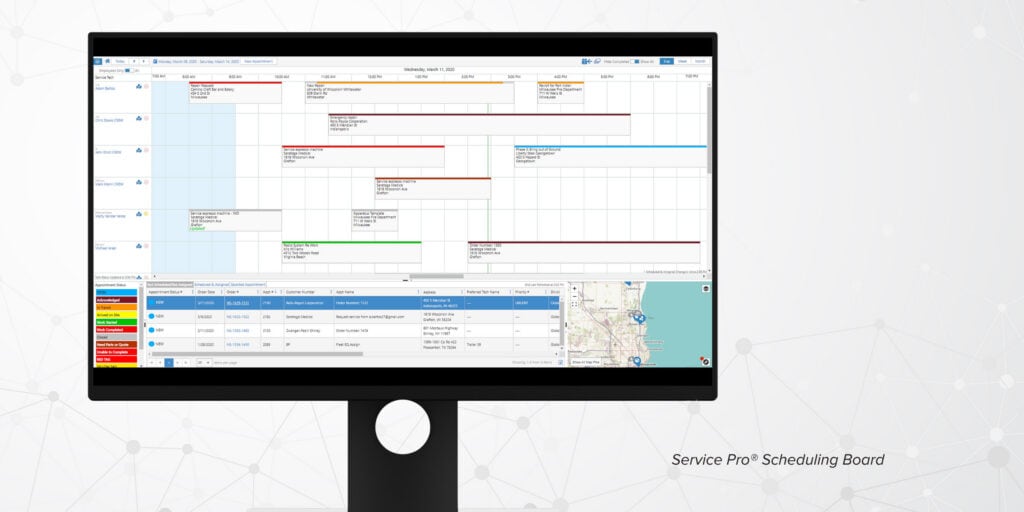
Dispatchers get visibility into technician skills, certifications, and real-time location, so jobs get assigned to the right person the first time. Mobile work order execution puts asset history, service manuals, and digital checklists directly in a technician’s hands, with offline access built in for job sites with limited connectivity.
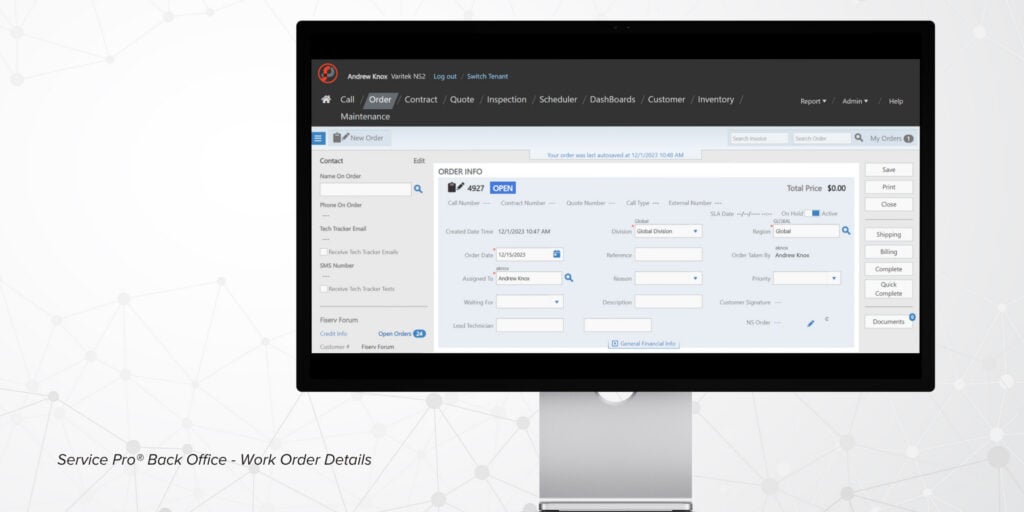
Waukesha-Pearce Industries (WPI), a heavy equipment dealer and service provider, saw this play out directly. Before Service Pro, WPI’s field technicians lacked access to equipment history and worked largely on guesswork. After implementation, dispatchers reported that technicians were showing up to jobs with the notes and background they needed to be prepared for the repair, and WPI’s District Service Manager Chad Ticknor noted how much faster his team could now close out work orders. WPI also cut its average preventive maintenance cycle time by more than 40 percent, a direct result of technicians spending less time diagnosing in the dark and more time completing the job.
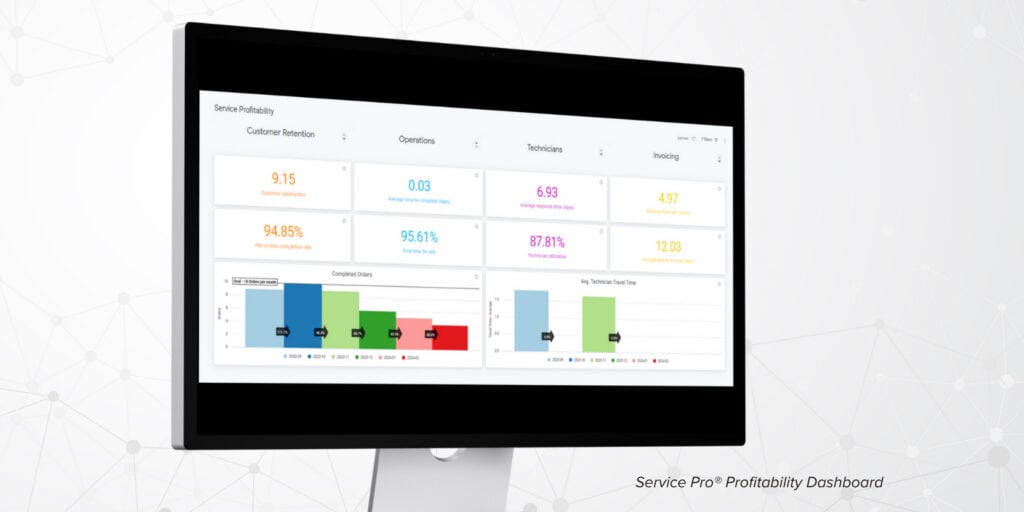
Service Pro’s reporting and business intelligence tools give operations leaders visibility into failure patterns, technician performance, and dispatch trends over time, the same data that fuels the continuous improvement strategy covered above. Combined with Service Pro AI, which surfaces grounded, technician-specific guidance drawn from your own manuals and service history, Service Pro gives field service organizations the full toolkit to turn truck roll reduction from a goal into a measurable outcome.
Ready to see what fewer avoidable truck rolls could mean for your margins? Schedule your free demo today.